
Exploring the Apiaceae Family and Mental (and Physical) Well-being in September: A Midwest Correspondence
Started this morning in pure dread. Not a shred of logic or rationale, just sheer fear. Jumped out of bed, stared out the window, and was instantly gripped by alarm. I darted downstairs, shouting wildly, then shot back up again, yelling louder. I knocked my head on a wall, tore at my hair, and jammed my toe.
Michele’s morning took a chaotic turn because of my outburst. Completely alarmed, she raced after me, repeatedly asking, “What’s happening? Why are you freaking out?”
Once I could speak, I urged her, “Look outside!”
She did, and responded, “I don’t understand. What am I looking for?”
Her words only heightened my anxiety, and I bolted again—down, then back up—with Michele trying to keep pace.
“Scott!” she shouted, “What’s wrong with the view? Explain!”
I must have appeared bewildered, a mirror to her own confusion. “Can’t you see? Everything’s drenched! There’s something making it all wet!”
She sighed, “It’s just rain, Scott. Calm down.”
Rain? The term felt oddly nostalgic. I started recalling those days before the dry spell when I’d been hauling hoses around, all the while grappling with excruciating sciatica pain.
Okay, perhaps that wasn’t precisely how the morning unfolded. Maybe there’s a tad embellishment. But it captures the essence of recent times—prolonged dryness, agonizing back pain, and a failing memory. The energy I invest in devising systems to remind myself of things often surpasses the effort of recalling them. This isn’t living, particularly when compounded by pain and drought.
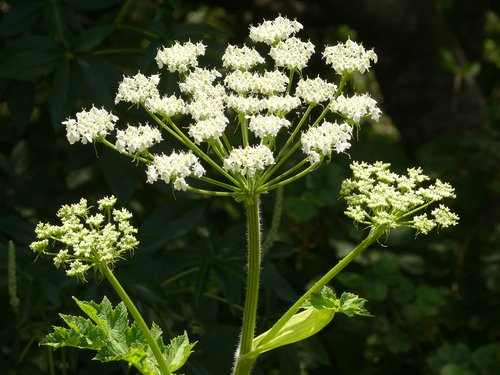
In your last letter, you delved into Umbellifers, seemingly inspired by another UK visit. Honestly, I wasn’t deeply familiar with the Apiaceae family until you mentioned it. Here’s the extent of my prior knowledge: they’re an expansive family of similar-looking plants, often tall with a slightly wild appearance. Despite their delicate charm, many are deadly, making them dangerous for foragers. They’re pollinator favorites, guaranteeing their future in gardens. I was rather pleased knowing just that, but your letter introduced me to new varieties. For some reason, you’ve always given me credit for being more plant-savvy. Why the act? What’s your motive?
Nonetheless, you’ve piqued my interest. Beyond purple fennel and some struggling dill, I’ve barely touched the Apiaceae realm. Anthriscus and Ferula sound intriguing. I might experiment with them in my front yard, which is wilder than the back. Thank heavens for no homeowner association restrictions.
While you’re exploring the exotic, I’m celebrating the mundane. It takes guts to admit this as a plant enthusiast, but I’ve found renewed admiration for the common. My garden’s hostas and phlox have been outstanding.
Hostas have been a complicated love affair. I once wrote a satirical piece on them, inspired by a dreary visit to a hosta breeder. Yet, I own an extensive collection, thanks to a friend undergoing a divorce in the 80s. She handed me a bulk of hostas, which I neglected for days before planting. Still, they flourished. Especially the fragrant types. They’ve been a sight to behold and smell this summer. As for the phlox, they’ve been thriving under the sun for months. I’ve been fortunate with mildew-free foliage on them. Lucky me.
That Tetrapanax papyrifera suggestion? Not happening. Too high maintenance, especially when there are plenty of resilient plants that can be equally harmful.
Am I basic for preferring the ordinary? Maybe. One thing’s for sure—I’ve cherished the simplicity of my garden, which nicely complements my Corylus fargesii. Upcoming talks will consume my weekends, with a trip to Philly on the horizon. More on that next time.
Cheers,
Scott
P.S. Did you notice how I paired common plants with a rare one in that second-to-last paragraph? Clever, right?
P.P.S. Isn’t it hard to truly empathize with another’s pain? I feel people never grasp the depth of mine. Similarly, I struggle to comprehend theirs. Food for thought for our next correspondence.