
Nasturtiums in Their Natural Habitat
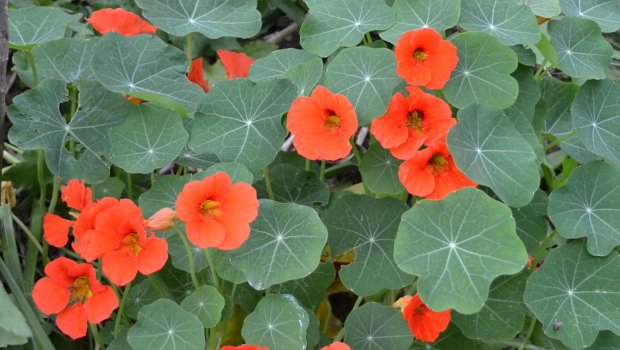
I hail from a long line of nasturtium enthusiasts. The linchpin of our family’s nasturtium tradition was my mother, Molly Bush. Every Good Friday, come rain or shine, she’d plant annual nasturtium seeds, well ahead of the last anticipated frost.
These seeds found a home beside the sun-kissed southern wall of our Louisville family residence. Somehow, the magic of Good Friday always protected these delicate sprouts from unexpected frosts. Molly planted these flowers with pure, undiluted joy. If she heard me label her as the “matriarch” of our gardening clan, she’d probably laugh. To her, gardening wasn’t about prestige; it was her genuine love for the vibrant nasturtiums.
Interestingly, we never discussed the edible aspects of these plants amidst our family dinners of meatloaf and cherry-flavored gelatin. There was never any mention of culinary adventurer Euell Gibbons either.
Interestingly, the expertise around nasturtiums made a comeback with my daughter, Molly. Now a gardener, forager, and herbalist in Bellingham, WA, she’s reintroduced the family to the culinary delights of nasturtiums. The leaves, flowers, and seed pods find their way into her meals due to their tangy, mustard-like flavor. Under the guidance of her mother, Ali Mathews, we even ventured to taste Nasturtium-flavored gelatin. At a recent dinner party hosted by Amy and Drew Daly, we met Phoebe Wahl, an acclaimed children’s author who’s also a talented baker and a fellow nasturtium aficionado. Bellingham may be subdued, but when it comes to celebrating nasturtiums, they sure know how to light up the city.
Growing up, I wasn’t naturally inclined towards plants. I remember receiving a red geranium pot on Easter Sunday, which didn’t survive till Ascension Day because I overlooked its need for water.
It was only in my early twenties that I truly embraced gardening. While I experimented with various plants, nasturtiums never really made it to my list. My ambitions led me to try growing exotic plants, with varying degrees of success. However, the local conditions of central Kentucky didn’t favor some of my choices. As the years passed, I realized it’s natural for gardeners to face some failures and embrace certain weeds.
Nasturtiums, scientifically known as Tropaeolum majus, are almost guaranteed to bloom. If you’re under the impression that they’re just basic annuals, you might want to look into the Hanging Nasturtiums display at Boston’s Isabella Stewart Gardner Museum.
This year, I reconnected with my family’s nasturtium legacy. Molly gifted me a beautiful tin of nasturtium seeds from Sequoia Seeds on my birthday in May. I planted them around a stump left behind by a white pine, a casualty of a violent windstorm in March. Although not all seeds sprouted, by August, the stump was adorned with sprawling nasturtium vines and their vibrant blooms.
I can imagine my mother looking down with a smile on her face.