
Reconnecting with Ed Snodgrass: The Green Roof Expert and Citizen Scientist
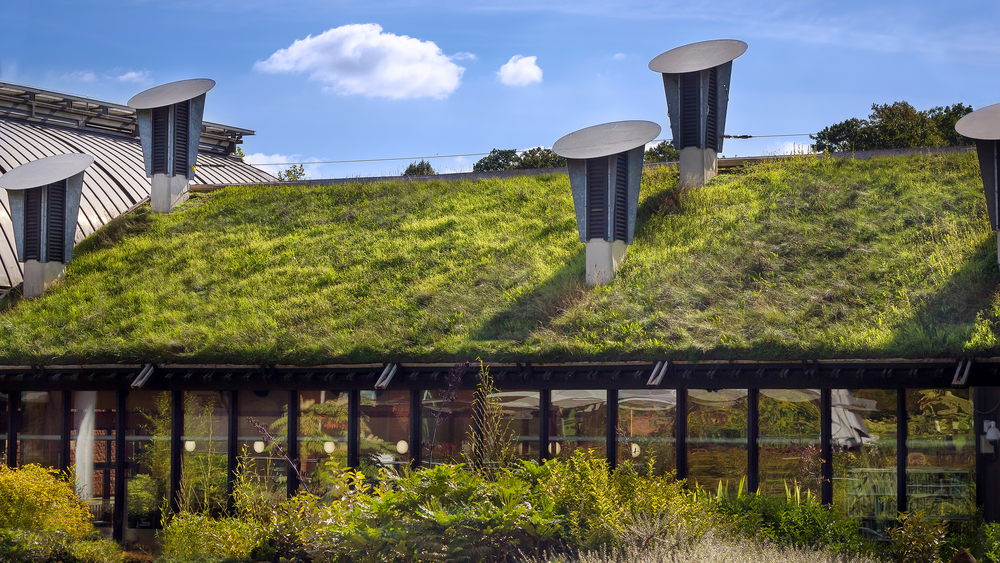
Ed Snodgrass is renowned for the eco-friendly roof plants he cultivates at his Maryland-based nursery and his international consultations on green roofs. When I toured his establishment in 2016, I was captivated by what I believed was the most aesthetically pleasing solution for stormwater management I’d ever encountered. (Allen Bush has documented its design in one of his articles.)
Recently, Ed extended an invitation to see his garden, and it never fails to impress with its groundbreaking approaches in sustainable gardening. On this visit, I observed how prosperous his rain garden has become. Ed shared that over the past three years, the garden hasn’t demanded much attention. It swiftly matured from the initial plugs and was planted in expansive clusters. A few initial plant choices were labor-intensive, but they have since been replaced. If you’re familiar with Henry Mitchell’s advice on low-maintenance designs, you might recall his advice against gravel. However, Ed clarified that he used a fabric barrier beneath the gravel, which, since its installation in June, has prevented weed growth. He advises against placing gravel directly on soil. In areas where certain plants didn’t thrive, he’s incorporated gravel and decorative rocks, creating a visually appealing contrast and accentuation. I share his admiration for this design approach.
Ed’s principle for green roofs, including the one at his place, is that they require intensive care for the initial half-year. After that, consistent maintenance for about 2-4 years ensures they’re well-settled. An interesting plant that’s thriving even on the asphalt driveway is the Phyla nodiflora. It’s a magnet for a myriad of insects, and Ed recommends integrating it into existing lawns to enrich them rather than replacing the lawn entirely. While it isn’t evergreen, it holds its own against regular grass and flourishes in meadow-like environments.
During my visit to the farm, I was thrilled to come across the Seven Son Trees. These trees, which gained popularity in the ’50s and ’60s due to breeding initiatives by Harvard and the National Arboretum, were the talk of the town at Chelsea this year. The typical species, like those cultivated by Ed, can reach heights of 15-20 feet, and there’s a more compact version, “Temple of Bloom”, that stands at about 10 feet. However, one can manage their growth by pruning them aggressively.
What makes these trees stand out is their incredible ability to attract a myriad of insects, from bees to butterflies and flies. Ed often finds joy in standing beneath the tree, immersing himself in the buzzing of these creatures. The tree is not only an insect magnet but is also resilient, thriving even in challenging conditions. Plus, in the two decades that Ed has grown them, they’ve shown no signs of seeding, reducing the risk of them becoming invasive. On my previous visit, I noticed Ed using a flame weeder. However, he has now transitioned to steam as a safer and cost-effective herbicide alternative. According to Ed, this method has gained traction in small Maine towns, especially in public gardens, eliminating the need for warning signs about poisons. This allows children to play freely and immediately after its application. Ed also mentioned witnessing this steam method in Australia, where it’s attached to tractors for roadside maintenance, given the country’s strict fire regulations.
Inside Ed’s residence, he introduced me to the Nature Metrics app, which he utilizes to analyze water samples from his land. A London-based laboratory then decodes this data, presenting detailed insights into the various species inhabiting his farm, from birds and amphibians to mammals. The company asserts that their eDNA tool offers an unparalleled glimpse into a site’s biodiversity, capturing the entire range of life, regardless of their visibility.
Though the technical intricacies of the app might be beyond my comprehension, Ed’s application is straightforward: he adjusts the habitat based on the detected species to encourage the proliferation of other related species. As I wrapped up my visit, Ed generously gifted me a potted Seven Son Tree (which instantly became a hotspot for bees on my patio) and a jar of his unique “Felony Jam” – a delightful mix of nine fruits. To my amusement, I learned that selling jam made from over five fruit types is actually illegal, hence the playful name. Ed believed that this quirk made his jam perfect for a GardenRant feature, and I couldn’t agree more.