
Acquiring Pawpaw Knowledge Gradually: One Step at a Time
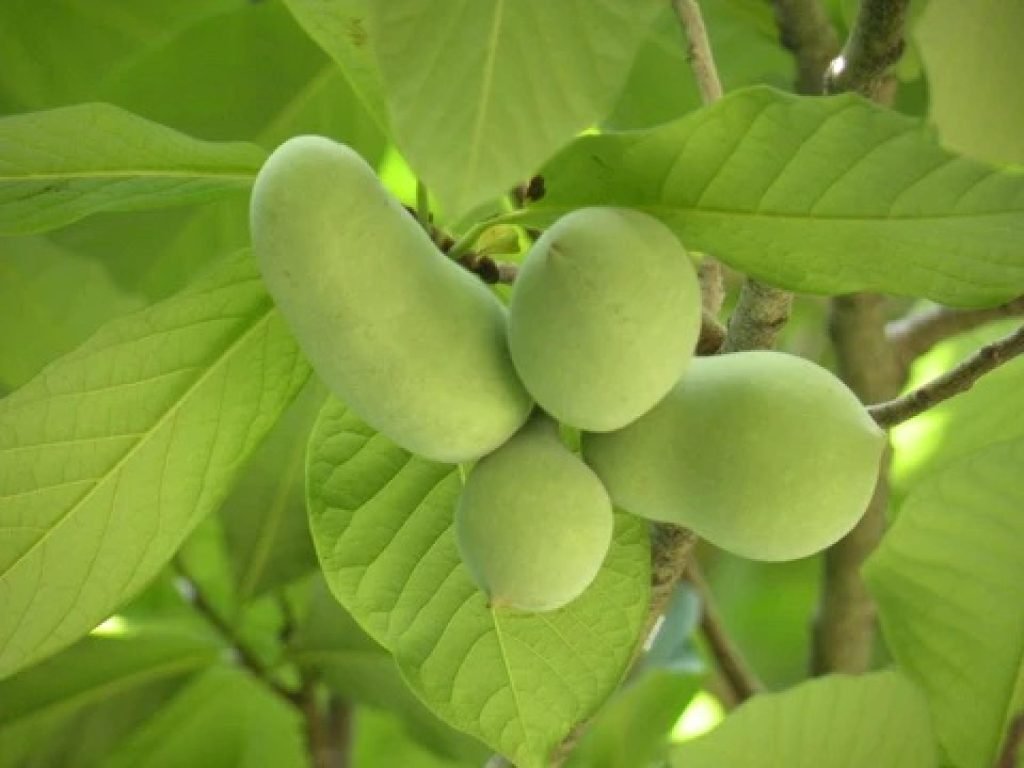
I believe that many gardening enthusiasts and anyone who has trekked through the forests of eastern North America will, at some point, become enamored with pawpaw trees. My own fascination began in the early 1980s, and it captivated me completely. I’ve stayed loyal to this interest ever since. Over the years, I’ve acquired enough knowledge to debunk a few myths. Back then, there were widespread beliefs such as: pawpaws rarely bear fruit, they need male trees or a decaying animal hanging from a branch to lure carrion-seeking pollinators, they can only thrive in the shade, and they’re nearly impossible to relocate. A lot of these misconceptions stemmed from observations in the wild, which don’t necessarily reflect their potential in a nurtured environment.
Initially, a significant part of my understanding about pawpaws was gained from observing them in their natural habitat. I once had a role that required me to clear invasive honeysuckle from a forested area. Amidst the dense overgrowth of honeysuckle and other intrusive plants, I found a plethora of pawpaw trees. Or to be more precise, I stumbled upon a vast pawpaw colony. What appeared to be thousands of individual trees were actually stems emerging from a singular root system, making each one a clone of the others. This vast expanse spread across more than 22 acres. However, none of these trees ever bore fruit. Over a span of 15 years working in that area, I never came across a single fruit. This was consistent regardless of the conditions—whether during the time honeysuckle dominated, post-honeysuckle era, in sunlit areas, shaded zones, or even close to the creek. The reason for this barrenness was the nature of the pawpaw trees: they aren’t self-fertile. To bear fruit, a pawpaw tree requires cross-pollination with another tree that has its unique genetic makeup nearby. Unfortunately, this vast colony lacked such a partner.
Indeed, I took the initiative to bring change. I planted a series of seeds along the extensive, serpentine driveway, and over time, some of them sprouted, blossomed, and eventually, both these new trees and some of their neighboring ones from the original colony began bearing fruit. While the yields weren’t always massive, there was consistently some fruit. Now, I realize it might seem a bit audacious to claim that a single colony expanded over such a vast area, potentially extending to neighboring lands. But consider this: why couldn’t a suckering plant naturally spread across such a large territory, especially in a setting that’s transitioning back to a forest after previously being used as pastureland?
Due to the entire expanse being a single clone, any attempt to transplant its small offshoots was futile. These young sprouts were merely extensions of the larger root system, and it was almost impossible to excavate enough root for these shoots to sustain independently. This experience debunked a prevailing myth I had heard about pawpaws. The widely accepted belief was that pawpaws couldn’t be transplanted. While this holds true for those taken from the wild, I discovered it’s entirely inaccurate when transplanting pawpaws grown from seeds in containers.
It was likely during the 2000s when I embarked on the journey of growing them from seeds, and over time, I nurtured hundreds. At first, I used seeds I had bought, but within half a decade, my initial seedlings bore fruit. This allowed me to start planting seeds from my own trees. The most effective germination method I found was not only swift but also cost-effective, straightforward, and enlightening. I would fill a 5-gallon pot with Pro-Mix, adding some fine limestone gravel to enhance the weight (preventing accidental tip-overs) and ensuring a slightly looser mixture. Arranging the seeds closely together atop this mix and then covering them with an additional inch of the medium, I’d leave the pot outdoors throughout the winter.
The subsequent spring, I observed an approximate 75% germination rate, but the process was somewhat unexpected. As anticipated, three-quarters of the seeds sprouted when the potting mix reached around 70°F. Given the pawpaw seedlings’ distinct taproot systems, they were easy to extract from the 5-gallon pot. I then either moved them into individual containers or directly into the ground. Due to the clean extraction, I never had the need to empty the nursery pot. Thus, I assumed the remaining seeds would sprout the next spring — a standard occurrence. However, to my astonishment, during a particularly scorching midsummer heatwave, when the temperature of the potting mix must have soared to the 80s or even 90s, almost all the leftover seeds sprung to life. That was a complete deviation from the norm. Could this unusual behavior be attributed to some residual genetic trait from pawpaws, being the only temperate member in an otherwise tropical genus? It’s hard to say.
During that period, I was actively cultivating various tree species from seeds. One of the advantages of this activity was having an abundance of seedlings on hand, allowing for experimentation. For instance, to answer the debate over pawpaws’ ability to thrive in direct sunlight, I planted a few in unshaded areas. To my satisfaction, they grew perfectly well! Moreover, they required minimal additional watering. Since then, I’ve noticed other pawpaws flourishing in sunlit areas, and they often exhibit a striking, well-defined pyramidal shape, which is quite captivating.
I intentionally planted the twelve trees in direct sunlight close to each other, aiming to promote efficient pollination. The strategy was successful, yielding an abundance of fruit – much more than I could possibly consume. When the fruit ripens, its distinct aroma permeates the entire yard. It’s an enchanting fragrance, though occasionally overpowering. Ironically, despite having a wealth of pawpaws at my disposal, I’ve never truly acquired a fondness for their taste. Most of the fruit is savored by the local wildlife. And just to set the record straight, I’ve never resorted to hanging a deceased animal on the trees to attract pollinators, yet I consistently experience excellent pollination results. We’ve been fortunate enough to never experience a disappointing year in terms of fruit yield.
I’ve heard that SW Ohio lies at the center of the pawpaw’s indigenous territory. I haven’t verified this claim, so it might just be another pawpaw tale loosely based on fact, or not at all. But, does it really matter? I am enamored with pawpaw trees. In shaded areas, they grow slender and elongated, while in sunlit spots, they take on a pyramidal shape, adorned with lush, tropical-looking leaves. Their unique fruits, resembling green, misshapen potatoes, house a creamy interior with a flavor reminiscent of bananas, yet distinctively unique. Come autumn, their leaves transform into a radiant shade of yellow. Additionally, they serve as a habitat for one of my cherished butterflies, the zebra swallowtail.
So, if you’re considering it, go on and plant a pawpaw. However, ensure you’re prepared for its offshoots, as they do have a propensity to spread. While pawpaws might seem modest in size, with literature often labeling them as small trees, don’t be deceived. Given adequate time, your pawpaw might not just dominate your yard but could potentially sprawl throughout your vicinity. It might even surpass other “larger” trees in terms of its overall biomass. The world of pawpaws remains a mystery in many ways, suggesting that there’s still much to uncover about these fascinating trees.