
Cultivate an Eupatorium Plant
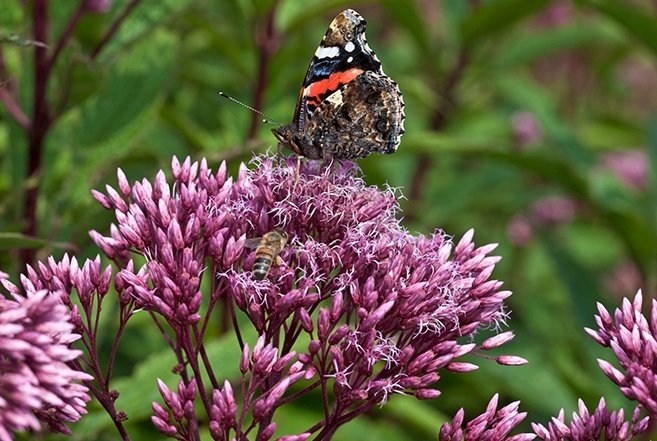
Navigating the world of Eupatoriums has been quite the challenge for me, especially since some have now been renamed to Eutrochium. And there are others that have potentially been reclassified to Ageratina – but you’d better ask Ben for clarity on that one. There are a handful I absolutely adore and can’t get enough of, and then there’s one I have mixed feelings about but keep getting more and more of, regardless of my intentions.
To give you an example, there’s one that might be recognized as Hemp agrimony in the UK. This particular plant has its merits, being a native and all, and it’s definitely a hit with the local insects (although, I’m still on the fence about wasps). There’s no denying the buzz of activity around these plants. However, its coloration seems somewhat muted and it’s a rather sizable plant. But if I prune it early enough in the year, it becomes manageable. Tired of its rampant seeding, I’ve asked Angus (who should be dubbed my “Garden Miracle”) to remove its blossoms. This man is a whirlwind, planting hundreds of bulbs and managing the Eupatoriums in just a day’s work.
Yet, among these, there’s one I’m particularly fond of – the Eupatorium cannabinum ‘Flore Pleno’. Bob Brown, the renowned British plantsman, had recommended it for its unique pink hues. I planted it alongside my Rosa Felicia and was delighted with the outcome, even when overshadowed by Japanese anemones in late summer. I ordered more of these beauties, only to find a variation in their color, which didn’t sit well with me. It’s frustrating when perennials take their time to reveal their true nature and then turn out to be different from what you expected.
Nevertheless, they have now almost lined the entire border of my garden, and their presence, especially during this season, brings me immense joy.
I’m also enchanted by a deep purple Eupatorium. Its exact classification remains a mystery – possibly Eupatorium maculatum ‘Riesenschirm’ or perhaps a variant from the Atropurpureum Group. Their beauty is unmatched in the autumn months, and while I haven’t tried, they’re said to complement certain roses and hydrangeas perfectly.
Christopher Lloyd mentions its American nickname, Joe Pye-Weed, which apparently wasn’t much appreciated in its native land. However, Piet Oudolf sings praises of its structural elegance and the delicate hues of its flowers.
These plants can grow quite tall, but their sturdy root system provides ample support. There’s also a shorter variant known as ‘Purple Bush’, though its height, as suggested by some nurseries, is still considerable. Maybe there’s been a mix-up in the information?
Honestly, Eupatoriums can be a tad bewildering, especially with so many variations and reclassifications. There are several I’m unfamiliar with. For instance, Eupatorium rugosum ‘Chocolate’ is a mystery to me. Yet, I own a rare gem: Eupatorium rugosum ‘Braunlaub’ with its pristine white blossoms. Despite my best efforts, it didn’t thrive initially, but relocating it seemed to do the trick. It’s currently not available in the market, which might hint at its delicate nature. I cherish it and hope it thrives.
If you’re contemplating adding these to your garden, don’t let my befuddlement dissuade you. Although they prefer moist conditions, they’re generally uncomplicated to care for and a real visual treat. Whether you’re a seasoned botanist or just a garden enthusiast, these plants will surely leave an impression. I, for one, couldn’t imagine my garden without them.