
Camellias Blooming in the Late Season
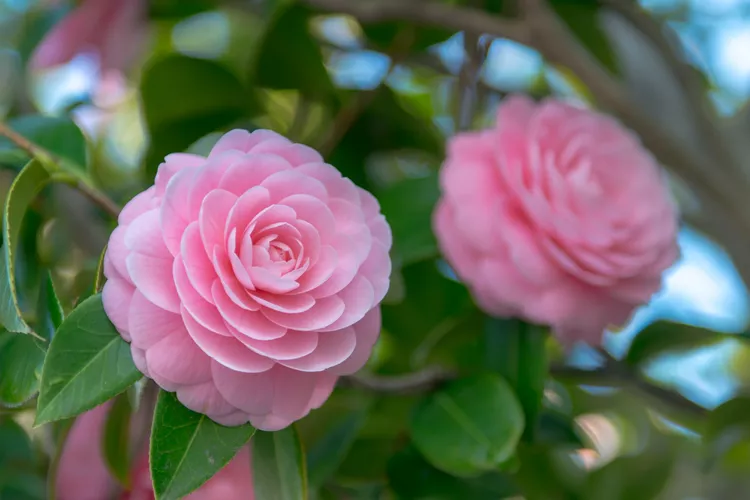
Round this season, my feelings are somewhat conflicted. As summer’s warmth wanes and winter looms, I’m reminded of the inevitable flow of time, which I can’t change.
With the onset of autumn – or fall, as some call it – nature showcases its abundance. My gardens brim with the harvests of squashes, apples, and pears. Trees and shrubs don radiant hues, while asters and the golden shades of grasses add charm to the surroundings.
While asters hold a steadfast place in the late-season garden, can we not crown the autumn Camellias as the monarchs of this period?
It’s curious. The allure of spring-blooming Camellias is unmistakable. They announce spring’s onset with their diverse and captivating flowers, ranging from understated singles to showy doubles, spanning sizes and colors from pure white to deep red.
The renowned spring Camellias cast such a shadow that their later-blooming counterparts can seem out of place, as if they’re blossoming off-schedule.
Prominent Late Bloomers Most of the Camellias that flower later often trace their lineage to two principal species. Camellia sasanqua, hailing from Japan, is the more recognized of the two, while Camellia hiemalis originates from Southeast China. These species, along with their cultivated varieties, have been interbred to produce some truly remarkable garden plants. While there are other late bloomers, such as Camellia granthamiana from Hong Kong, they remain on the fringes of popular cultivation. As time progresses, they might gain more recognition, but their particular growing requirements make them less likely candidates for mainstream gardens.
Scent Although a few spring Camellias boast a mild fragrance, none match the aromatic potency of the later bloomers. Varieties like the age-old Camellia ‘Narumigata’ and its close kin ‘Rainbow’ offer a powerful fragrance which, in enclosed spaces, can be overwhelming. However, in an open garden, their scent is mesmerizing. Others, like the delicate C. ‘Winter’s Snowman’, possess a more understated fragrance that invites you to come closer.
Cultivation Insights It’s commonly believed that late Camellias crave abundant sunlight. While they indeed flourish in direct sunlight after settling in, they can also thrive and bloom proficiently in partial shade. Essential to all Camellias is consistent watering during their early stages. Regular hydration, especially in warmer regions, ensures their healthy growth. An acidic to neutral soil, similar to what Rhododendrons favor, is preferable. However, these late bloomers are generally hassle-free to cultivate.
Potted Growth Camellias can adapt to container growth, given they’re pruned thoughtfully and receive proper nourishment and hydration. A late-blooming, fragrance-rich Camellia near the main entrance would be a delight. It’s vital to remember that while Camellias display resilience to cold when planted in the ground, their roots are vulnerable to severe frosts. In cold-prone areas, it’s advisable to protect the pots with insulating layers, like burlap. For regions with persistent winter frosts, ground planting is the best choice for any Camellia variety.